Allmänt meddelande

Collapse
No announcement yet.

Small bisque vase with nude child

Collapse
X
 
  • Filter
  • Klockan
  • Show
Clear All
new posts

  • Small bisque vase with nude child

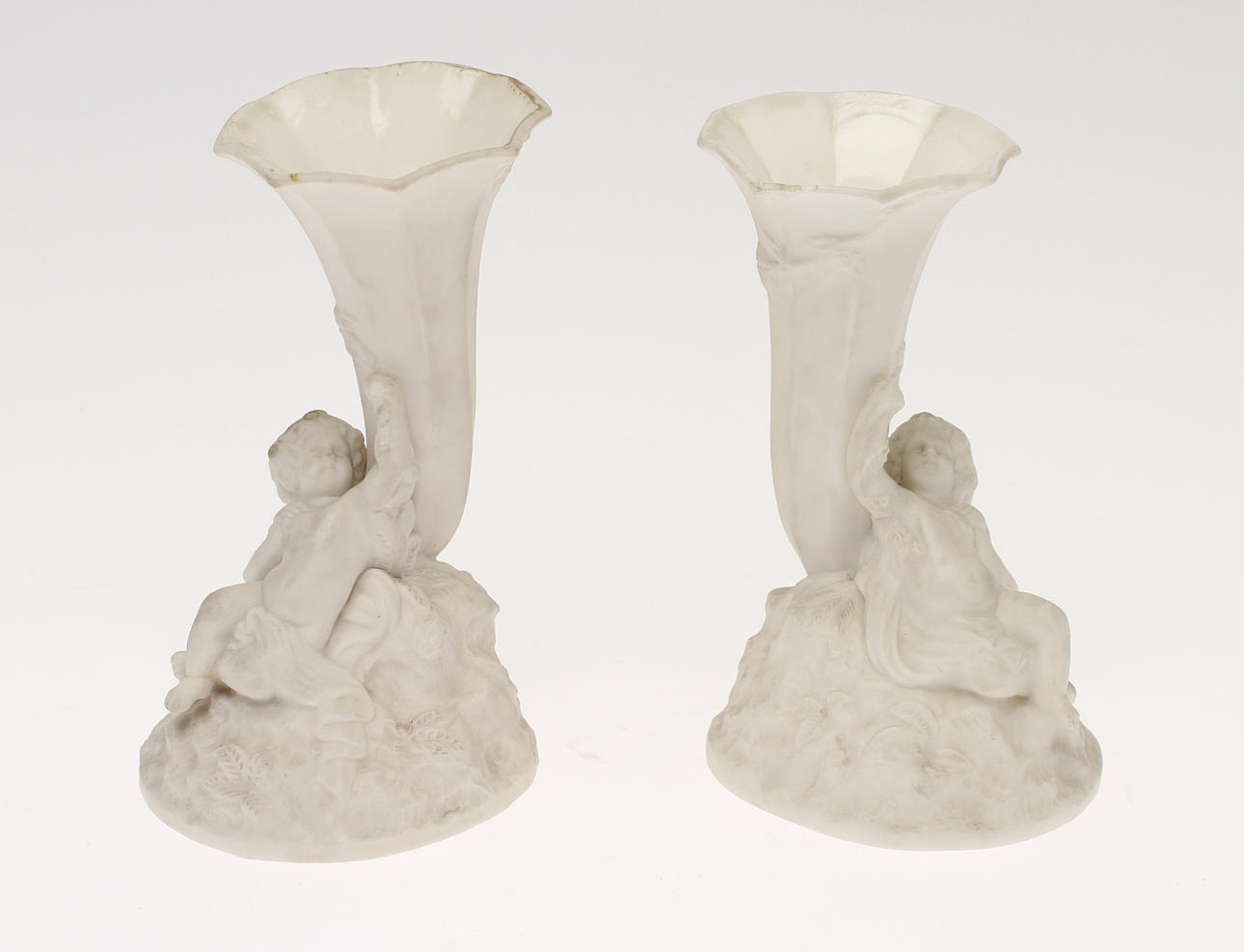
    Greetings from Finland! I found this beautyful bisquit / porcelain vase from the flea market recently. There is the nude child in the stand; the vase part is maybe some kind of horn?
    I bought the vase even though it is broken. As you can see from the photos, the horn has glued from the low part of it.
    Measures: 13 cm (height), 7,2 cm x 7,9 cm (stand), 202 g (weight).
    There is Gustafsberg anchor mark stamped to the bottom.
    Maybe someone can tell me more about this figurine/vase? The age and the history? How rare is it? Value? I tried to find out this kind of things by Gustafsberg from internet, but nothing found. Thank you for the answers.
    Bifogade filer
    Last edited by hegeman; 2014-09-13, 22:27.

  • #2
    Hi and welcome on board!

    I can only say that the stamp was used between 1860-1890 and this kind of vase featuring a cherub with a horn of plenty and garlands are all in line with the more romantic neo renaissance/neo classicism popular back then. Often used in pairs for small flowers or eternelles. Not that common, but not incredibly rare either, it doesn't cost a lot since demand is low, especially since it's damaged. A nice antique fleamarket find all the same!

    Hopefully somebody else will chip in on model name and such if there is one. We have some incredibly knowledgeable people in here!

    Comment


    • #3
      Parian ware

      Hi and welcome to the forum!

      I completely agree with Jung_Kee. These unpainted and unglazed white vases in bisque porcelain are called Parian ware.

      Note that the link below with the vases have an unusually low maximum bid.


      Comment


      • #4
        Thank you for the answers!

        Hi again, thanks for the answers. I learned a new thing, Parian. And it is nice to notice there has been an other same kind of object in auction. I cleaned up glue spots from the vase, and it is now better.
        I am wondering one thing. I checked Gustavsberg marks from the signaturer.se. And there is two marks what I compared to my object. I think the mark in my vase is between 1839-1860 and 1860-1890 marks. There is some things from both. The word Gustafsberg in the earlier mark is not so tight, so I think later mark is like mine. But there is some difference in the anchor line. In the earlier mark it is like in mine vase - the end of the line is in the vertical part, and in the later mark the line is going to the hole. Why there is this kind of differences?

        Comment


        • #5
          Your vase is marked with the stamp, which was in use from 1860-1890. Gustavsberg first began producing parian in the 1860s.

          Now is the time to start collecting the parian ware. The interest is small, hence the low prices.

          Comment

          Working...
          X